
India’s ‘Cockroach’ Youth Movement Ends Protests After Education Minister Dharmendra Pradhan Resigns
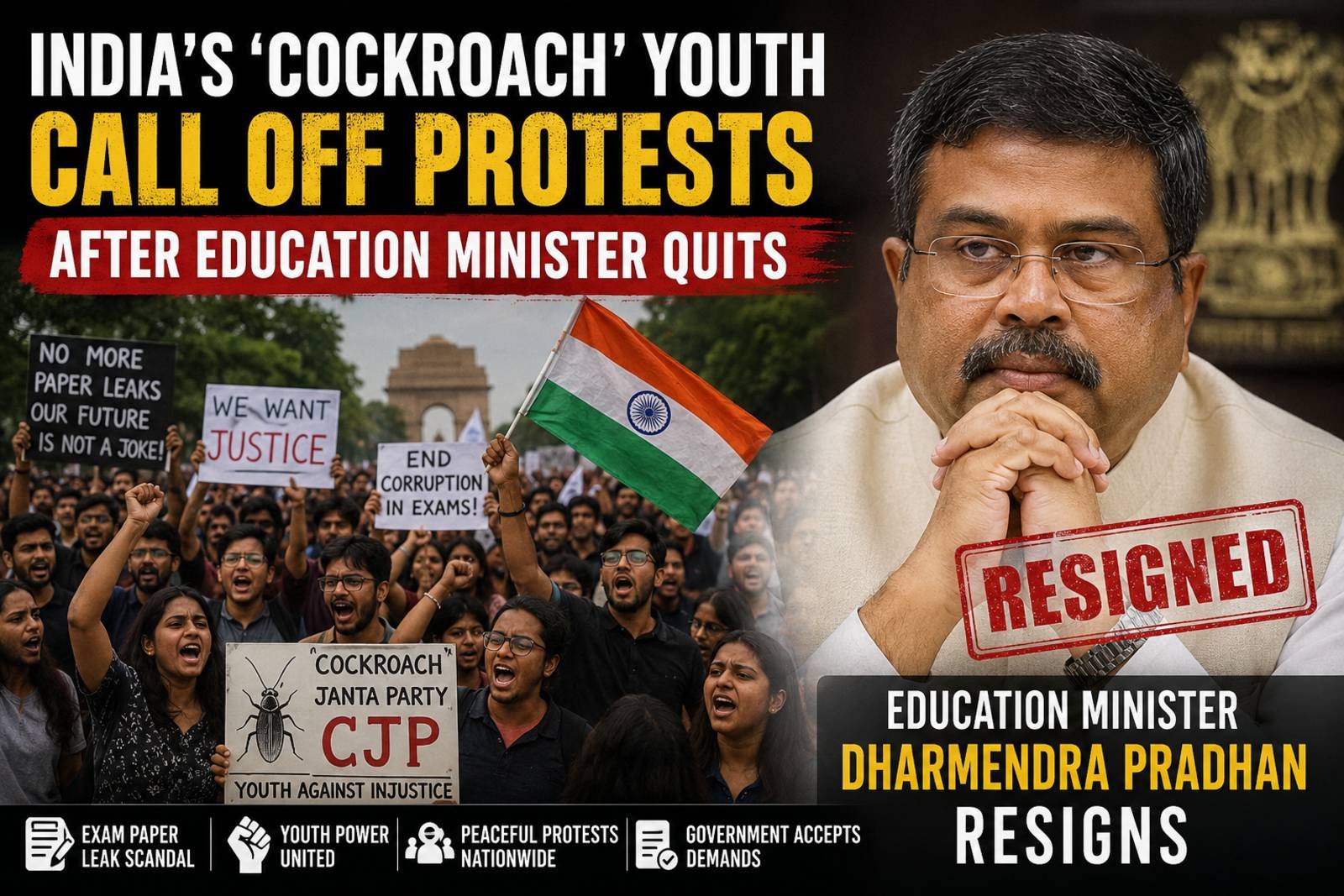
India Cockroach Youth Protests in India came to a close on Saturday when Union Education Minister Dharmendra Pradhan quit after weeks of protests across the country. The movement, led by youngsters, began over allegations of examination papers being leaked and demands for accountability and ended with the government’s acknowledgment of the main demands of the protesters.
The movement stemmed from a series of examination paper leak scandals, especially regarding entrance exams that impacted millions of students across India. The protesters lamented that the constant irregularities in the examinations had tarnished the reputation of the education system in the country and called for accountability from the central government.
India Cockroach Youth Protests: Why Did the Protests Begin?
The protest erupted from accusations surrounding a series of leaks with regards to examination papers, which also includes findings of irregularities around entrance examinations like NEET. A large number of candidates who were engaged in making preparations for these competitive examinations for months were upset with exams being cancelled, results being delayed, and the whole process of recruitment and admissions being unfair.
Initially the protests were born on the internet through a youth association under the name of Cockroach Janta Party. However, the campaign that was supposed to be conducted only on the internet changed into a social movement involving students, young professionals, teachers, activists, and leaders of political movements.
In a matter of weeks, protestors gathered at the site of Jantar Mantar in New Delhi and people also took part in demonstrations in the key cities of India such as Mumbai, Bengaluru, Kolkata, Hyderabad, and Patna.
India Cockroach Youth Protests: Government Faced Growing Pressure
The rash of protests compelled the central government to take notice of the public grievances and respond to them through tougher measures against examination fraud. Prime Minister Modi, among other things, promised stricter laws against those responsible for leaking examination papers and creating fast-track courts.
India Cockroach Youth Protests, Meanwhile, the protest leaders maintained that merely issuing government decisions was not enough. Their main demand remained the resignation of Education Minister Dharmendra Pradhan, whom they considered to be politically responsible for the persistent failures of the examination system in India.
India Cockroach Youth Protests: Police Crackdown Increased Public Attention
The week had seen an escalation in tensions at the protests, which were sparked by police attempts to break up demonstrators who were moving towards the Parliament in New Delhi. As per reports, the security forces used tear gas and batons, resulting in injuries to numerous protesters.
The authorities also placed a temporary ban on mobile internet services in the area of Jantar Mantar, in addition to shutting down multiple Delhi Metro stations in the area, as part of preparatory measures undertaken to control the crowd.
The footage from the protests was shared through social media platforms, generating intense interest among the public and putting pressure on the Government to resolve the issue peacefully.
India Cockroach Youth Protests: Dharmendra Pradhan Announces His Resignation
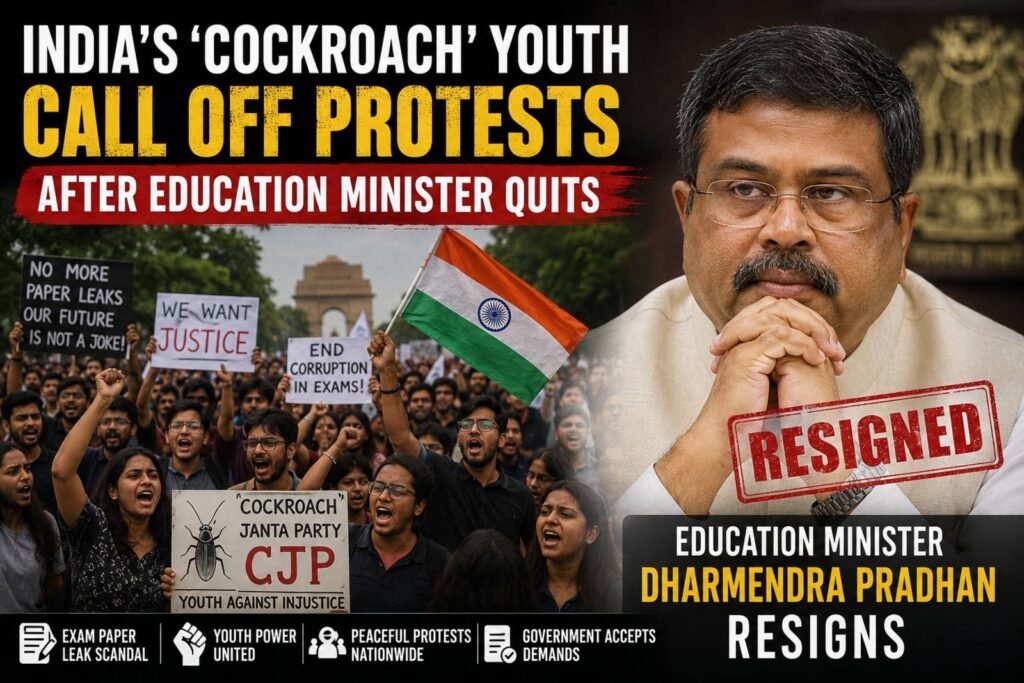
On August 3, Dharmendra Pradhan, brought the news of his resignation through an official announcement, saying he has sent his resignation to Prime Minister Narendra Modi.
According to his statement, he appreciated the dreams and aspirations of the youth of India and that he took this decision to avoid any further increase of tensions across the nation.
His career path includes several important cabinet roles since 2014, and he served as the Minister of Petroleum and Natural Gas and Steel and also as Minister of Education from 2021. His resignation is amongst the most remarkable leaves during the tenure of the Modi government.
India Cockroach Youth Protests: Protest Leaders Declare Victory
The Weekend’s Minister resigned pretty quickly after which the leaders of the Cockroach Janta Party announced the end of nationwide agitation.
The representatives of the movement later stated that there had been an agreement on most of their demands, after which the leaders urged their supporters to leave the places of protest peacefully.
The protestors were celebrating in Jantar Mantar filling the air with sweets, Indian flags, and patriotic calls. Later the restrictions of the Internet in the area were abolished as well.
India Cockroach Youth Protests: Additional Demands Raised by Protesters
Besides demanding the Education Minister’s resignation, protest leaders had also sought several additional measures, including:
- Compensation for families of students reportedly affected by examination-related tragedies.
- Withdrawal of legal cases filed against peaceful protesters.
- A public apology over police action during demonstrations.
- Comprehensive reforms to prevent future examination paper leaks.
Government representatives reportedly agreed to several of these demands during negotiations, paving the way for the movement’s conclusion.
India Cockroach Youth Protests: Political Reactions
Opposition parties were glad to note Dharmendra Pradhan’s step-down from the position and called it a triumph for democracy. Numerous leaders from the opposition stated that the peaceful protests performed by the public had succeeded in compelling the authorities to act politically.
A number of officials asked for a more thorough investigation into the irregularities during the last set of examinations and demanded more essential reform measures to resolve the problem of trust in India’s exam similar to that of other countries.
At the same time, the representatives of the ruling party highlighted the readiness of the government to find a common ground with protestors and make reforms that would prevent similar scandals in the future.
India Cockroach Youth Protests: Why This Movement Matters
The Cockroach Movement has been defined by political analysts as one of the most influential youth campaigns in India.
What separates the Cockroach movement from traditional political protests is that it relies heavily on the use of social media, digital methods of organizing, networks of volunteers, and non-violent public demonstrations. Furthermore, the movement resonates with the greater issues bothering young Indians, such as the lack of job opportunities, demand for more transparency and accountability in governance, and the overall institutional accountability.
Observers believe the movement could change the way policies are formulated concerning Indian education policies in the future.
India Cockroach Youth Protests: What Happens Next?
Even though the protests are officially over, we are now waiting for the timely implementation of the reforms promised by the government.
As students and education specialists keep track of new legislation, security measures, and a faster investigation process, they are curious whether all this will help ensure that examination papers will not leak in the future.
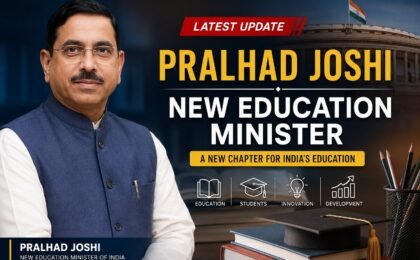
Also, the resignation of Dharmendra Pradhan raises a number of political issues related to the cabinet reshuffle and the new Education Minister who will lead the next stage of reform.
For millions of students all around India, whether the reforms will be successful will mean whether they will be able to trust one of India’s main public institutions.
India Cockroach Youth Protests: Conclusion
The end of the “Cockroach” youth movement in India is a significant milestone in the socio-political and education history of the country. It started off with anger at the paper leak incidents and ended up becoming a nation-wide movement to demand accountability and led to resignation of the Education Minister of India.
While the protests are over now, the challenge now is to implement some reforms to safeguard the credibility of the examination system and regain trust among students. The coming months will show us whether the promises made during the talks will be translated into institutional reforms.